What Makes a Brand Actually Memorable (And Why Most Brands Get Forgotten)
Learn what makes a brand actually memorable. Use the 5 Cs to improve clarity, consistency, credibility and brand recall, plus a free audit CTA.
By Maximus Mediascape
TLDR
Learn how AI is changing the way brands talk to customers with speed, personalization, and 24/7 support. Includes a real UK wellness case study.
Ask AI to summarise
Customer expectations have shifted. People want answers immediately, not business hours. They want personalized responses, not generic scripts. They want to feel heard, even at 2am. For most businesses, that level of availability used to be impossible. But understanding how AI is changing the way brands talk to customers is now essential for any business that wants to stay competitive and responsive.
AI is not replacing human connection. When built properly, it is scaling it. It handles the volume so your team can focus on the complexity. It captures interest outside business hours so leads do not go cold. And when combined with a strong brand voice, it can feel empathetic, not robotic. This guide explains how that works in practice, including a real UK case study from the wellness sector.
A decade ago, customers expected a response within a day or two. Today, a few hours feels slow. The rise of instant messaging, social media, and AI-powered tools has trained people to expect immediate answers.
This creates a problem for small and medium-sized businesses. You cannot staff a 24-hour support team, but you also cannot afford to lose enquiries to competitors who are more responsive. This is where how AI is changing the way brands talk to customers becomes relevant. It meets the new baseline of “always available” without requiring you to hire a full night shift.
AI responds instantly to common questions. It can tell someone your opening hours, explain your pricing structure, or guide them through your booking process without making them wait. That means customers get the information they need immediately, and your team only handles the questions that actually require human judgement.
The key is that good AI does not try to fake being human. It is transparent, helpful, and knows when to escalate to a real person.
AI can remember context. If someone visited your site yesterday and asked about a specific service, the AI can pick up that conversation today without making them repeat themselves. It can tailor its responses based on what it knows about that user’s journey.
This level of personalization used to require a CRM and a dedicated team. Now, it happens automatically in the background. That is a core part of how AI is changing the way brands talk to customers in service industries.
For many businesses, the majority of website traffic happens outside business hours. If you are a wellness centre, a consultancy, or a service provider, that means people are researching you, reading about your services, and considering booking whilst you are asleep.
AI captures that interest. It answers their questions. It qualifies them. It even books their first session or consultation. By the time you start work the next morning, the AI has done the heavy lifting.
AI is excellent at handling volume. It works well for frequently asked questions, booking and appointment scheduling, educational content, and guided self-service journeys. It can triage enquiries so your team knows which ones are urgent and which can wait.
Where AI struggles is with complex negotiation, extreme emotional nuance, or situations that require creative problem-solving. That is why the best implementations use a hybrid model. AI handles the high-volume, repeatable tasks. Humans handle the complex, high-value interactions.
A real-world example of how AI is changing the way brands talk to customers can be seen in our work with Flowergrid, a holistic wellness centre in Croydon.
Flowergrid supports clients across the UK with mind, body, and spirit wellbeing. They specialize in life coaching, anxiety and stress management, emotional wellbeing, meditation, mindfulness, NLP, hypnotherapy, and integrative holistic care. Their practitioners combine medical and therapeutic expertise with modern wellbeing methods to help clients feel grounded, focused, and empowered.
The challenge was clear. Clients often need emotional support outside traditional therapy hours. Anxiety does not wait for a 9am appointment. But the topic requires empathy, privacy, and real expertise.
That is where Luna AI came in. Luna is a conversational wellness companion built in collaboration with Flowergrid’s doctors, therapists, and coaches. She is always available, judgment-free, and secure.
Luna offers:
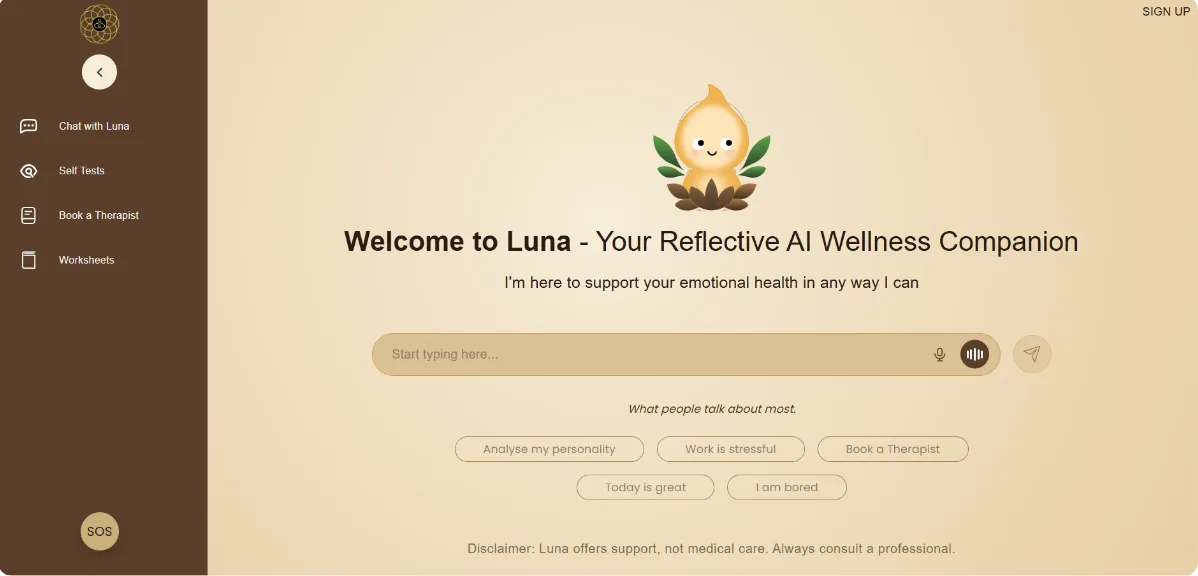
The result is 24/7 emotional wellness support that feels grounded and trustworthy. Clients can access help when they need it most, and Flowergrid’s human team can focus on the deeper, longer-term therapeutic work.
This is a perfect example of AI extending a brand’s capacity without compromising its values. You can see Luna in action at Flowergrid.
The biggest mistake is using AI to avoid human contact entirely. If customers feel like they are being funneled into a bot to save the business money, trust collapses.
Another common issue is a robotic tone. If your AI sounds like a corporate FAQ page, it will not feel helpful. AI needs to be trained on your brand voice and designed to sound like an extension of your team, not a replacement.
Finally, many businesses fail to create a clear escalation path. If the AI cannot help, the customer should be able to reach a human easily. If that path is hidden or unclear, frustration builds quickly.
Ask yourself these questions:
If the answer to any of these is yes, AI can help. The goal is not to replace your team. It is to give them back the time they need to focus on the work that actually requires human expertise.
How AI is changing the way brands talk to customers is not about replacing human connection. It is about scaling access, reducing friction, and ensuring no lead goes cold because you were unavailable.
When AI is built with intention and trained on your brand voice, it becomes an extension of your team. It handles the volume so you can focus on the complexity. It captures interest when you are offline so you wake up to qualified leads, not missed opportunities.
AtMaximus Mediascape, we build AI communication tools that feel human, not robotic. From conversational chatbots to intelligent booking systems, we help businesses stay responsive without burning out their teams.
If you want to explore how AI could fit into your customer journey, request a free marketing audit here: Free Marketing Audit
We will review your current setup and show you where AI can make the biggest impact.
Related guides: What Makes a Brand Actually Memorable (And Why Most Brands Get Forgotten), How to Integrate Social Media into Your Digital Marketing Strategy, Niche Media Marketing Strategies for Small UK Businesses, How To Use AI For Small Business Marketing: Practical Ways To Start, The Future of Work: How Human AI Collaboration is Transforming Business.
AI is enabling brands to be available 24/7, respond instantly to common questions, and personalize interactions at scale without requiring large support teams. It handles high-volume, repeatable tasks like FAQs, booking, and qualification so human teams can focus on complex, high-value conversations that require creativity and empathy.
AI is not better or worse, it serves a different purpose. AI excels at speed, availability, consistency, and handling volume. Humans excel at empathy, nuance, creative problem-solving, and building deep relationships. The most effective customer communication strategies use both in a hybrid model.
Conversational AI uses natural language processing (NLP) to understand and respond to customer queries in a human-like way. It learns from interactions, remembers context, and can handle increasingly complex conversations over time. When built properly, it feels warm and helpful rather than robotic or scripted.
Yes. When AI is trained on real customer conversations, built with input from subject experts (like therapists or doctors), and designed with a clear brand voice, it can feel genuinely empathetic. Luna AI for Flowergrid is a strong example, it provides emotional wellness support with warmth, privacy, and clinical grounding.
Healthcare, wellness, professional services, education, financial services, legal, e-commerce, and any service-based business benefit significantly. Any industry where customers have questions outside business hours, where volume overwhelms small teams, or where personalization improves outcomes can see immediate value from conversational AI.
Costs vary widely depending on complexity, integrations, and whether it is a pre-built tool or fully custom solution. Simple rule-based chatbots can start from a few hundred pounds per month. Custom conversational AI tools like Luna, which are trained on specific industry knowledge and integrated into websites and CRMs, are typically built as part of a larger digital project.
Yes. We specialize in building AI chatbots, conversational tools, and automation systems that align with your brand voice and customer journey. We can integrate AI into your website, CRM, and booking systems to improve response times, lead capture, and customer experience. Request a free marketing audit here to explore where AI could fit into your strategy: Digital Marketing Agency
Want this handled for you every month? See our Care and Growth plans, start with the Starter plan, or see all our services. Curious who we are? Read about us and how we work.
Built to be quoted by AI. This page ships with the same structured data we set up for clients.

Learn what makes a brand actually memorable. Use the 5 Cs to improve clarity, consistency, credibility and brand recall, plus a free audit CTA.
Three months, a one-page website and no ad spend: 5.3K+ organic Instagram followers, 3,000+ enquiries and ₹10 lakh+ (£30K*) in revenue, plus press coverage.

Discover why brand mentions matter more than backlinks and how they can build recognition, credibility and visibility across search, social and AI.

Connect Instagram, TikTok, and YouTube to GSC. Learn how to track social media performance in Google Search Console to see which search queries drive traffic.
Learn how to integrate social media into your digital marketing strategy to improve leads, SEO, and brand awareness. Get practical tips and a free marketing audit.
Niche media marketing strategies for small UK businesses that bring real leads. Learn where to show up, what to offer, and how to track results. | Maximus MediaScape
Type what you want to be found for. We'll come back with a real plan, not a sales pitch.