How we built AI search visibility for a Croydon wellness brand
Twelve months of search, community and AI visibility work for a local wellness business: impressions up 184%, AI-search visibility up 4.2× and qualified enquiries up 78%.
By Maximus Mediascape
TLDR
We built iAudit Global's digital presence from nothing: an 80+ page website, around 40 search-led articles, a full measurement setup, community activity and a LinkedIn page that reached 872 organic followers. The site now gets Google and Bing traffic, appears in AI answers, and has been seen in 129 countries, with no paid spend behind the organic results.
Ask AI to summarise
iAudit Global makes audit management software. It helps organisations plan, run and report internal audits against standards such as ISO 9001, ISO 14001 and ISO 45001. When we started, there was no established digital presence to build on.
Start
No established digital presence, no paid budget.
01
Industry, terminology, competitors and real search behaviour.
02
A structured, 80+ page resource built from scratch.
03
Around 40 search-led articles.
04
Analytics, tags and search tools wired up from the start.
05
Reddit, Medium, Substack and LinkedIn.
Now
Citations and mentions, still growing.
The product had a clear purpose. The market was highly specialised, and so was the audience. The website needed to speak to auditors, quality professionals, compliance teams, organisations running several sites, and the decision-makers looking for a more structured way to manage audit programmes.
That made this bigger than a website. We had to:
And there was no paid acquisition budget driving results. Everything had to be earned organically, so it had to compound.
We started with research, not design. We studied the audit and compliance landscape, the terminology the industry really uses, competing platforms, search behaviour and the questions people ask.
We also looked past the obvious commercial keywords. The opportunity was in the questions, problems and topics around internal audits, ISO standards, audit management, compliance and corrective actions. If the site could answer those, it could meet people at every stage of their research, not only at the moment they were ready to buy.
The strategy stood on four areas:
A technically strong site with a clear information architecture.
Search-led articles covering both commercial and informational intent.
Technical SEO and a full measurement setup.
Authority and visibility in places where the audience already talks.
One foundation, built to compound over time
The iAudit website was planned as a large, structured resource rather than a product brochure. It has grown to 80+ pages across the core product, individual ISO standards, industries, company information and supporting content.
Dedicated pages for each standard and industry let the site answer specific search intent instead of forcing one product page to say everything. The structure also leaves room to grow as the business moves into new topics, markets and audiences.
iaudit.global80+ pages and growing
The core platform
ISO 9001 · 14001 · 45001
Dedicated industry pages
Company information
Around 40, search-led
Keyword research shaped both the site architecture and the content plan. Over the engagement we carried out keyword and search-intent research, competitor analysis, technical SEO audits, content gap analysis, on-page optimisation, internal linking, technical SEO implementation, Search Console monitoring and ongoing content optimisation.
Finding opportunities
Seeing what happens
Around 40 articles were researched, written and published on audit, ISO, compliance and industry topics. The aim was never volume for its own sake. Each piece answers a real search, supports the wider topic structure of the site and gives another person a way in.
Learn
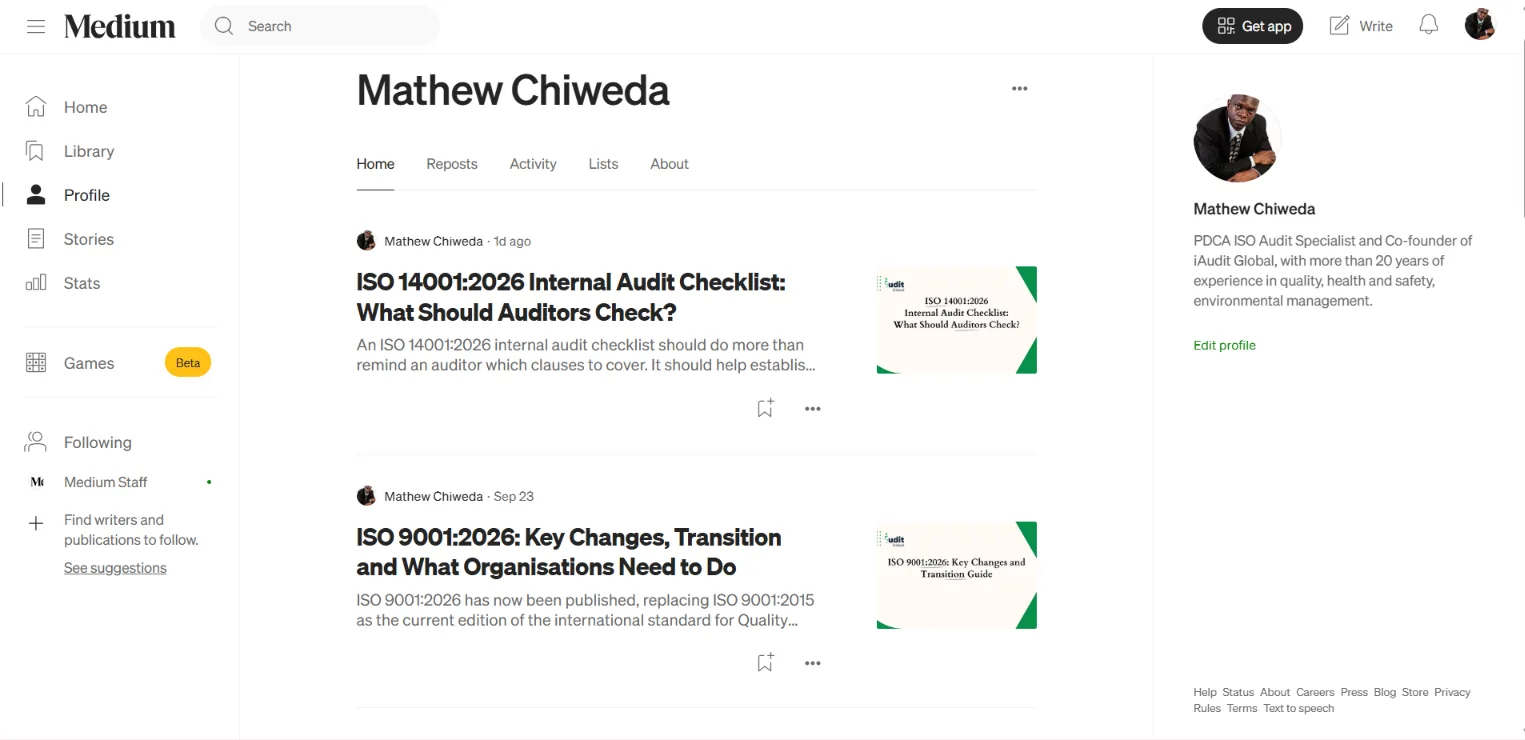
ISO 9001:2026: Key Changes, Transition and What Organisations Need to Do
Apply
ISO 14001:2026 Internal Audit Checklist: What Should Auditors Check?
Choose
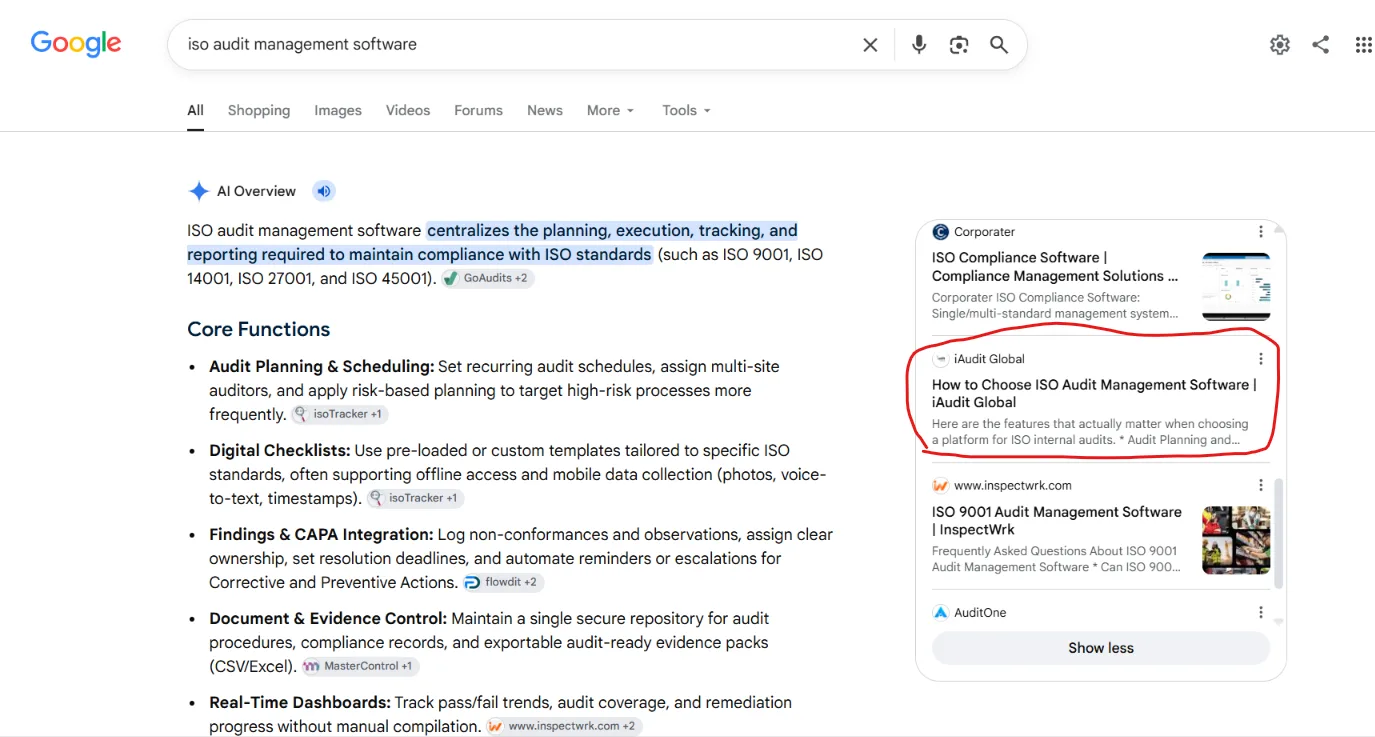
How to Choose ISO Audit Management Software
The site was supported by a complete tracking setup: Google Analytics, Google Tag Manager, Google Search Console, Microsoft Bing Webmaster Tools, Microsoft Clarity and Meta Pixel. It shows how people find the site, what they do on it and where the experience can improve.
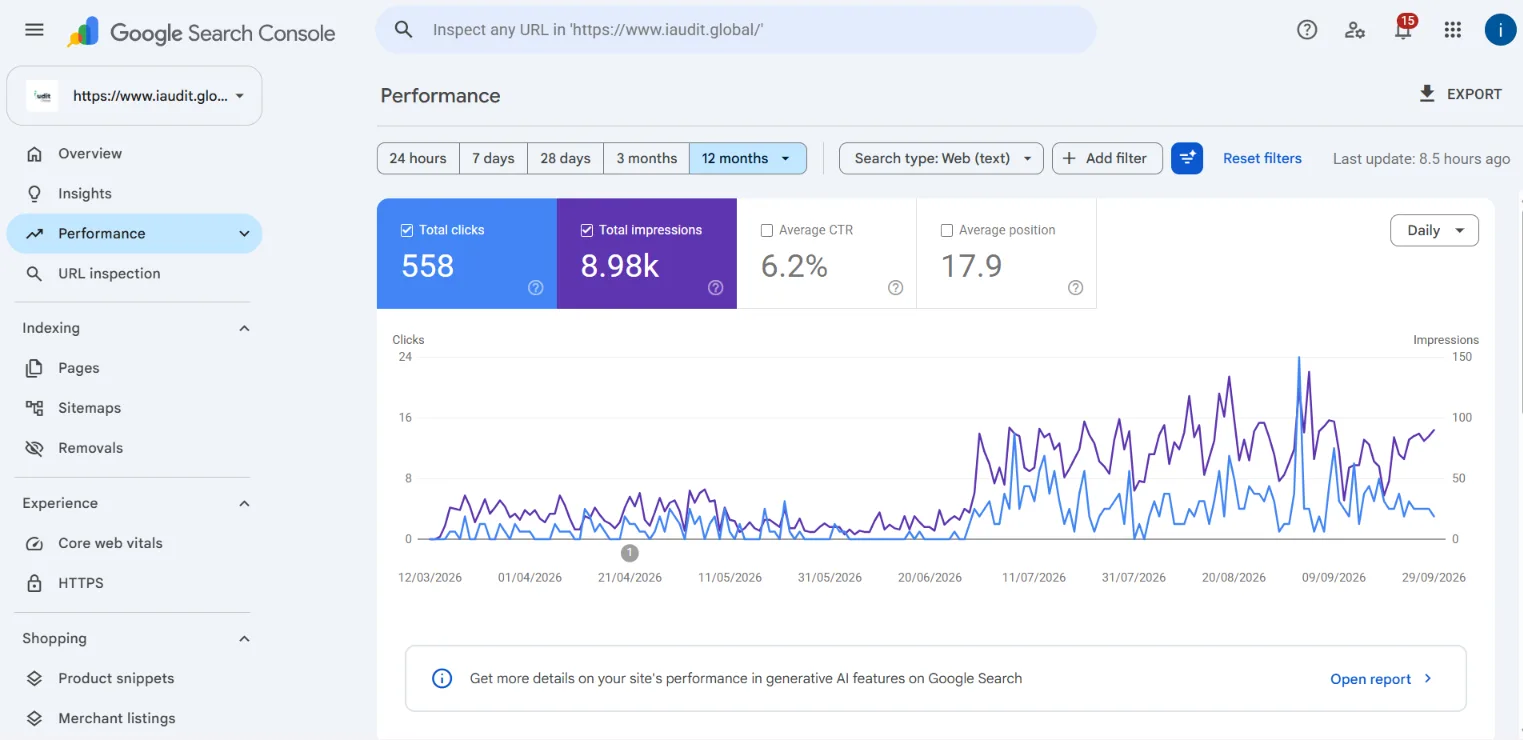
The results began to compound as the website, content and technical foundation matured. In Search Console’s 12-month view, the site recorded 558 organic clicks and 8.98k impressions, with a 6.2% average CTR and an average position of 17.9. In one three-month period it recorded 455 clicks and 7,030 impressions.
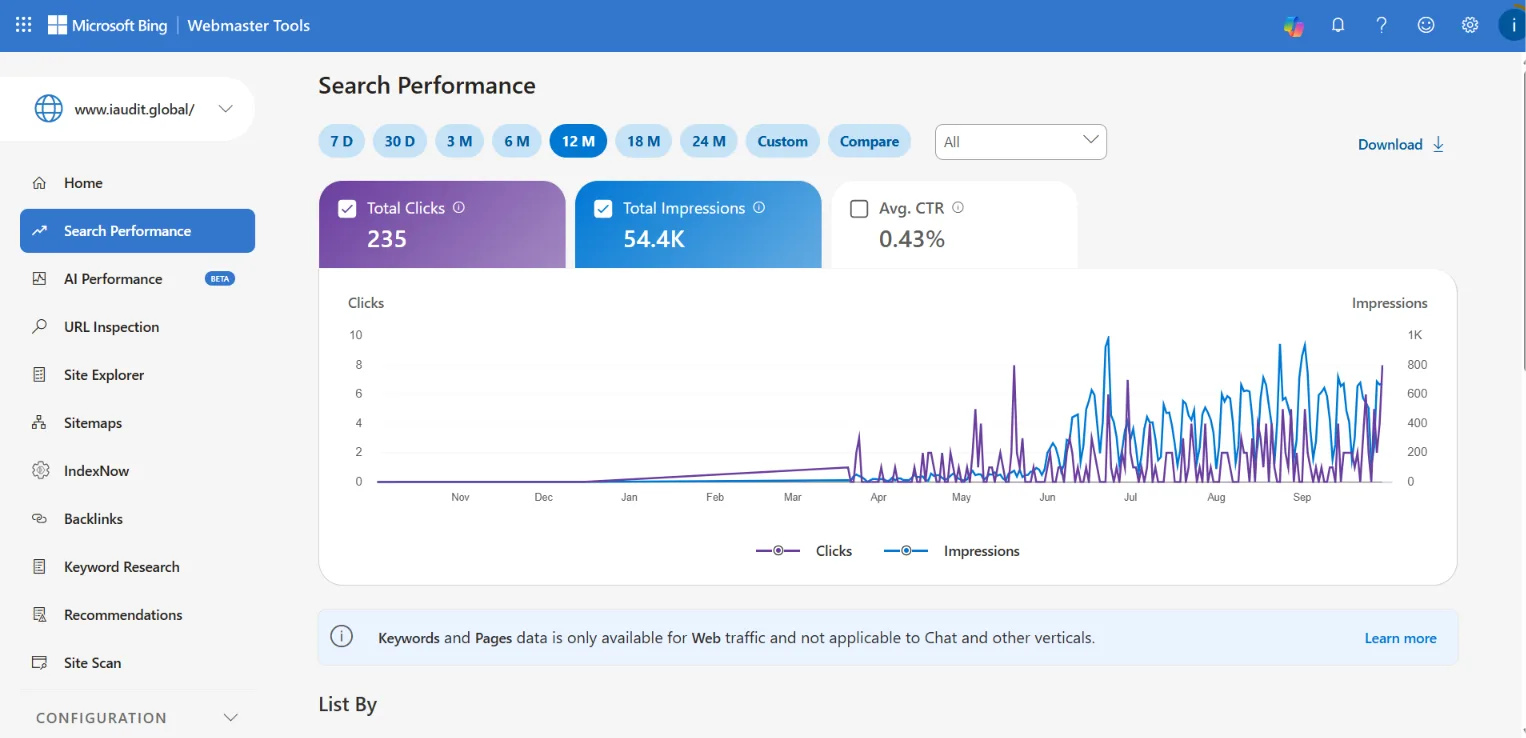
Bing added 235 clicks and 54.4K impressions over 12 months, with a 0.43% CTR.
None of this came from paid search. These numbers describe a site still building authority in a specialised category, not a high-volume consumer market, and that is exactly the point of building the foundation first.
Search was only one part of the plan. As AI tools became part of how people find information, we looked at where the information behind those systems comes from, and how iAudit could build a wider footprint.
That meant relevant Reddit communities and a dedicated iAudit subreddit, community participation, Medium, Substack and LinkedIn, including LinkedIn Articles and a newsletter. Reddit mattered in particular, because discussions and answers there can surface in search results and are widely used as reference material.
Where AI answers look
The aim was not simply to promote iAudit. It was to contribute useful information in places where auditors and compliance professionals were already talking.
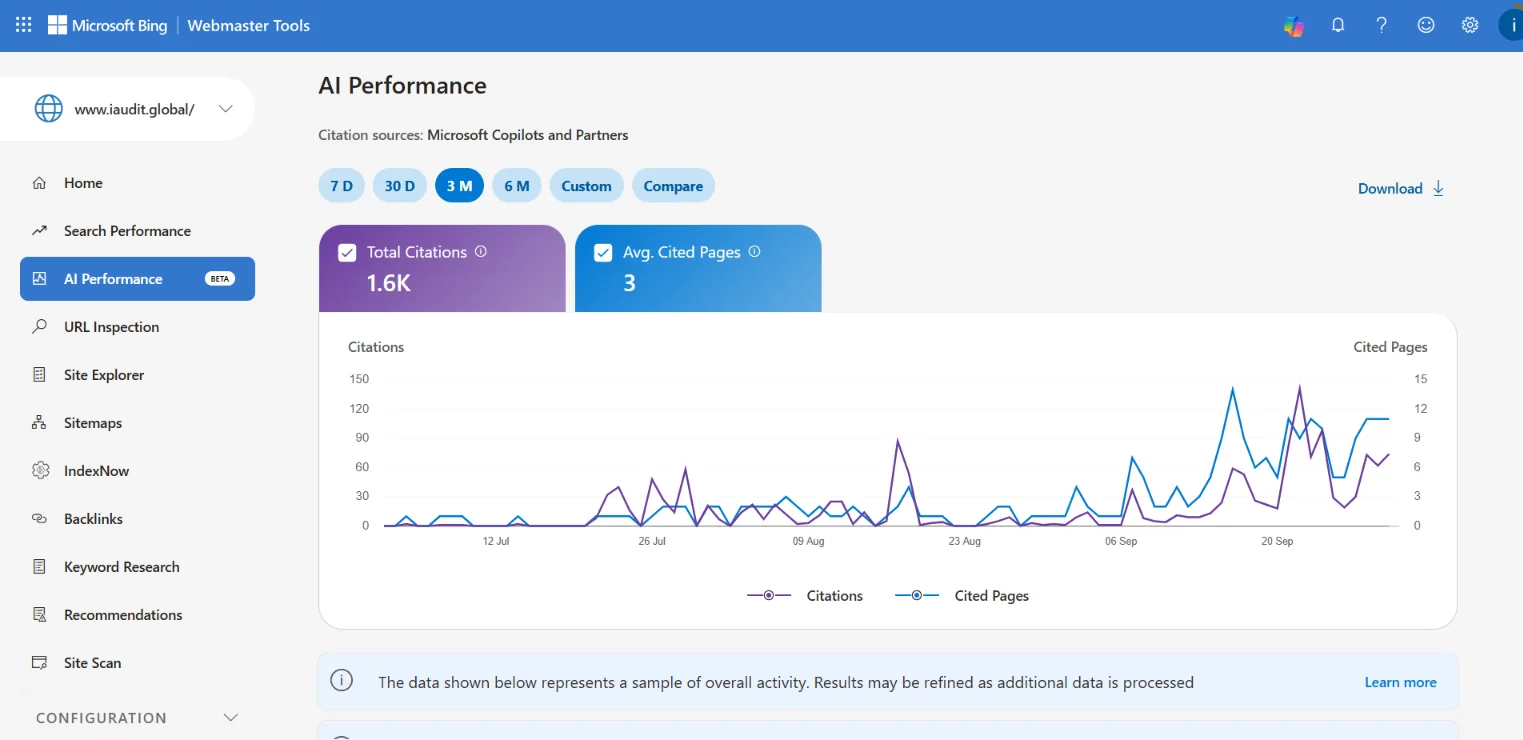
The work began producing visibility in AI-driven discovery too. Bing’s AI Performance report recorded 1.6K citations over three months, with an average of 3 cited pages, and across the AI visibility we tracked we recorded around 5,000 citations in total. This is an emerging area and the strategy keeps developing as AI search and answer engines change.
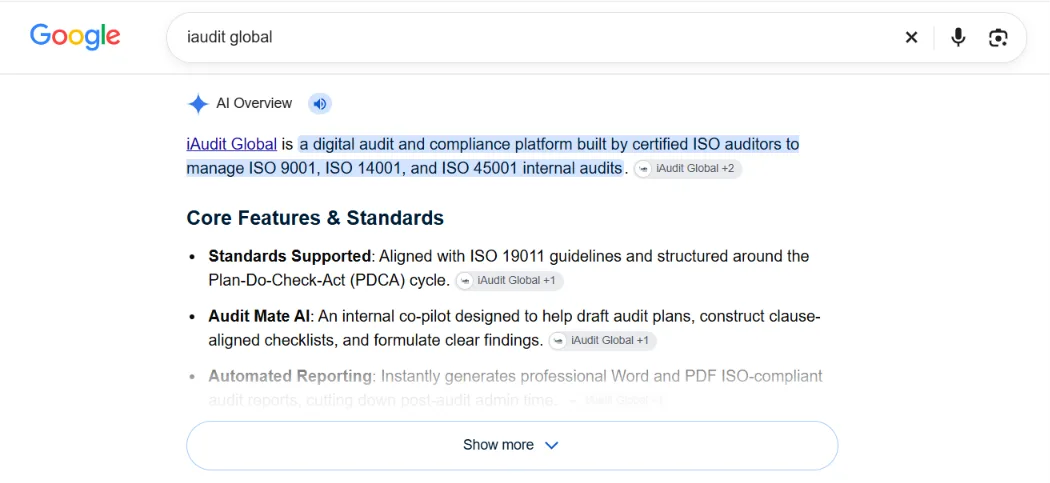
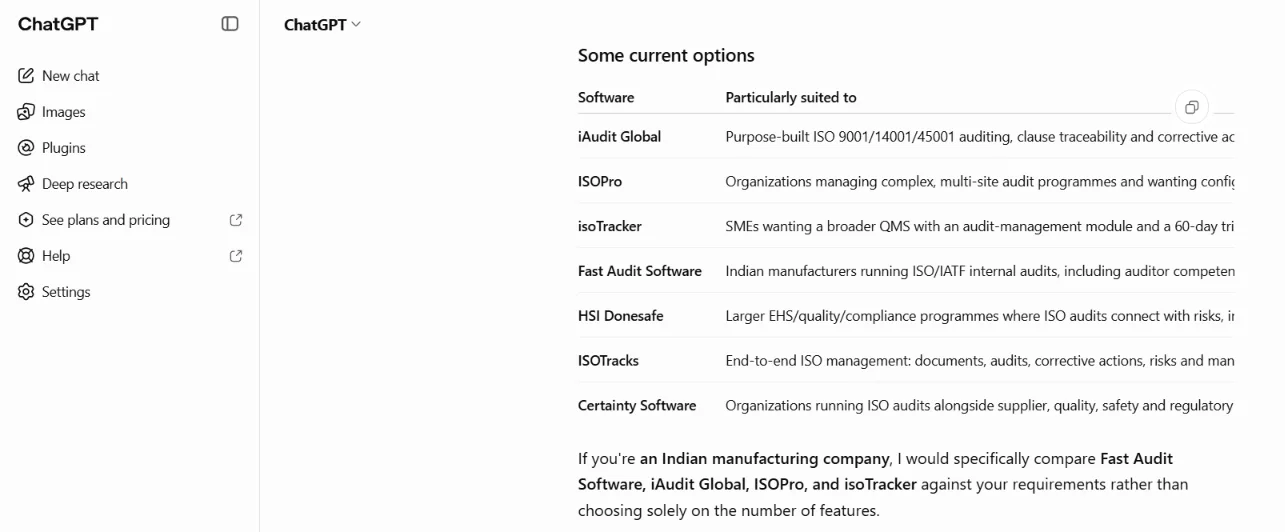
The same effort shows up in answers people actually read:
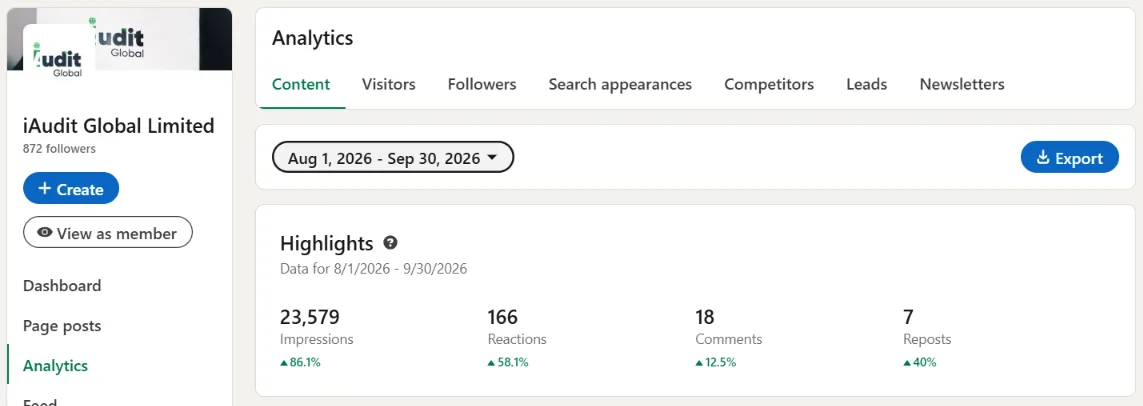
We treated LinkedIn as an acquisition channel in its own right, not somewhere to repost website content. We built and managed the page from scratch, with content around the problems, standards and questions its professional audience cares about. Over about 12 months it reached 872 organic followers, with no paid follower campaigns.
872organic followers in about 12 months, with no paid campaigns
23,579impressions, 1 Aug to 30 Sep 2026up 86.1%
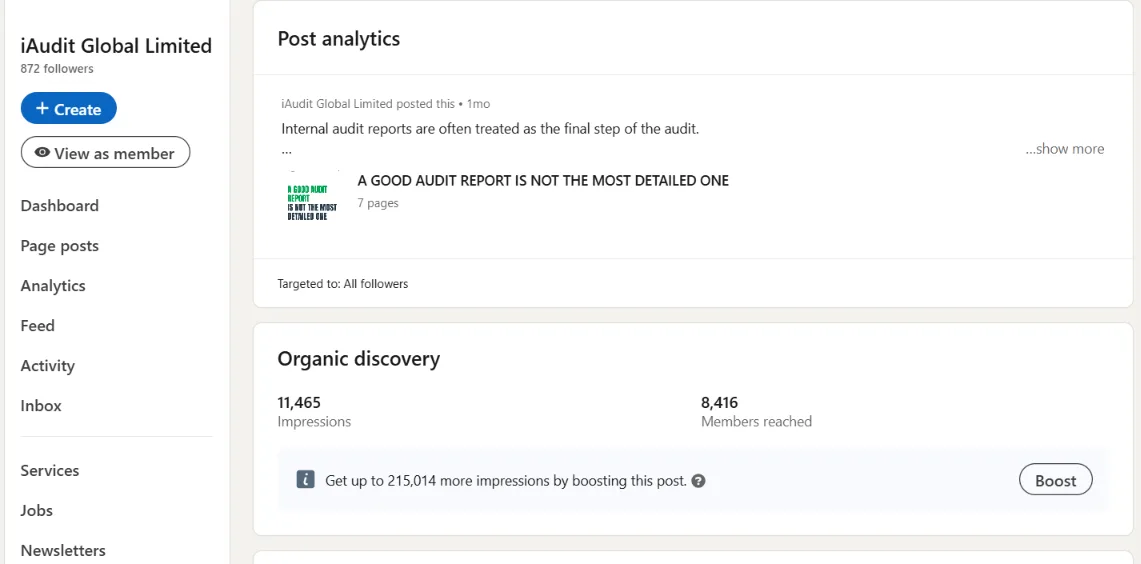
Content went out as regular posts, LinkedIn Articles and a newsletter for followers. Website articles were repurposed as LinkedIn-native content, so the same research reached the audience in different formats. One post reached 11,465 organic impressions and 8,416 members, with a reported 87.72% CTR.
The approach was designed for a global SaaS audience from day one. The website received impressions from 129 countries, far beyond its original operating base. For a specialised B2B product, that spread is a useful sign the content and search strategy are reaching different markets rather than staying in one region.
After around 12 months, iAudit had moved from no established digital presence to a growing organic ecosystem across search, content, social and AI discovery.
But the most important result is the foundation. iAudit was not built around a short-term traffic campaign. The architecture, content library, technical SEO, community activity and social presence were built to keep generating visibility as the brand grows.
Building authority in a niche B2B category takes time. There are fewer searches than in broad consumer markets, the audiences are more specialised, and buying decisions often involve research across several touchpoints. So we built those touchpoints one by one.
The website is the foundation. SEO brings relevant searches in. Content answers the questions behind those searches. LinkedIn keeps the brand in front of its professional audience. Community activity creates visibility outside the site. And AI-focused distribution helps the brand show up in newer discovery channels.
The work is still ongoing. The aim is not a temporary spike in traffic, but a digital presence that becomes more useful, more visible and more authoritative over time.
Built slowly. Built properly. Built for the long term.
We built the digital foundation for the brand: the website, search-led content, technical SEO and measurement setup, community and LinkedIn activity, and visibility work for AI-driven discovery. The engagement has run for 12 months and is ongoing.
No. There was no paid spend behind the organic search results or the LinkedIn follower growth. The focus was on building an organic foundation that compounds over time.
Bing Webmaster Tools' AI Performance report counts citations from Microsoft Copilot and partners. It recorded 1.6K citations and an average of 3 cited pages over three months, and Bing notes the data is a sample of overall activity. AI visibility is an emerging area and the strategy keeps evolving.
Audit software buyers search for specific standards and industries. A dedicated page for each lets the site answer a specific search properly instead of squeezing everything onto one product page, and it leaves room to grow into new topics and markets.
No. In a specialised category there are fewer searches and longer research journeys. We focus on building useful touchpoints one by one so visibility keeps growing, rather than promising a position.
Want this handled for you every month? See our Care and Growth plans, start with the Starter plan, or see all our services. Curious who we are? Read about us and how we work.
Built to be quoted by AI. This page ships with the same structured data we set up for clients.

Twelve months of search, community and AI visibility work for a local wellness business: impressions up 184%, AI-search visibility up 4.2× and qualified enquiries up 78%.
Three months, a one-page website and no ad spend: 5.3K+ organic Instagram followers, 3,000+ enquiries and ₹10 lakh+ (£30K*) in revenue, plus press coverage.

Does telling AI to act as an expert help? How long should a prompt be, and how many questions can you ask at once? A practical guide to what works.

Ready-to-adapt AI prompt examples for business, from customer replies to marketing copy and meeting notes, with tips on why each one works.

The first AI answer is rarely the final one. Learn how to tailor an AI response with follow-up prompts, fix common misses and stop them happening again.
Ten common AI prompting mistakes, why each one gives weak answers, and the fix. Covers vague asks, missing context, conflicting rules and unchecked facts.
Type what you want to be found for. We'll come back with a real plan, not a sales pitch.