Consideration Stage of the Customer Journey: How Customers Compare Solutions Before They Buy
Learn what the Consideration Stage of the Customer Journey is, how customers compare solutions and what businesses can do to build trust and win more sales.
By Maximus Mediascape
TLDR
Discover why the Retention Stage of the Customer Journey matters and explore practical ways to improve customer loyalty and encourage repeat customers.
Ask AI to summarise
Many businesses spend a significant amount of time attracting new customers. They invest in advertising, promotions, sales efforts, and improving their visibility to reach more people.
However, the customer journey does not end once someone makes a purchase.
The real opportunity begins after the first transaction.
The Retention Stage of the Customer Journey focuses on what happens after a customer chooses your business. It is about creating experiences that encourage customers to return, build trust, and develop a long-term relationship with your brand.
Whether you run a restaurant, retail shop, healthcare practice, service business, or online store, customer retention plays an important role in sustainable growth. A customer who has already purchased from you understands your value, which makes maintaining that relationship just as important as finding new customers.
Before customers reach this stage, they first move through earlier parts of the buying journey. Understanding the Awareness Stage of the Customer Journey helps businesses understand how customers first discover their products or services.
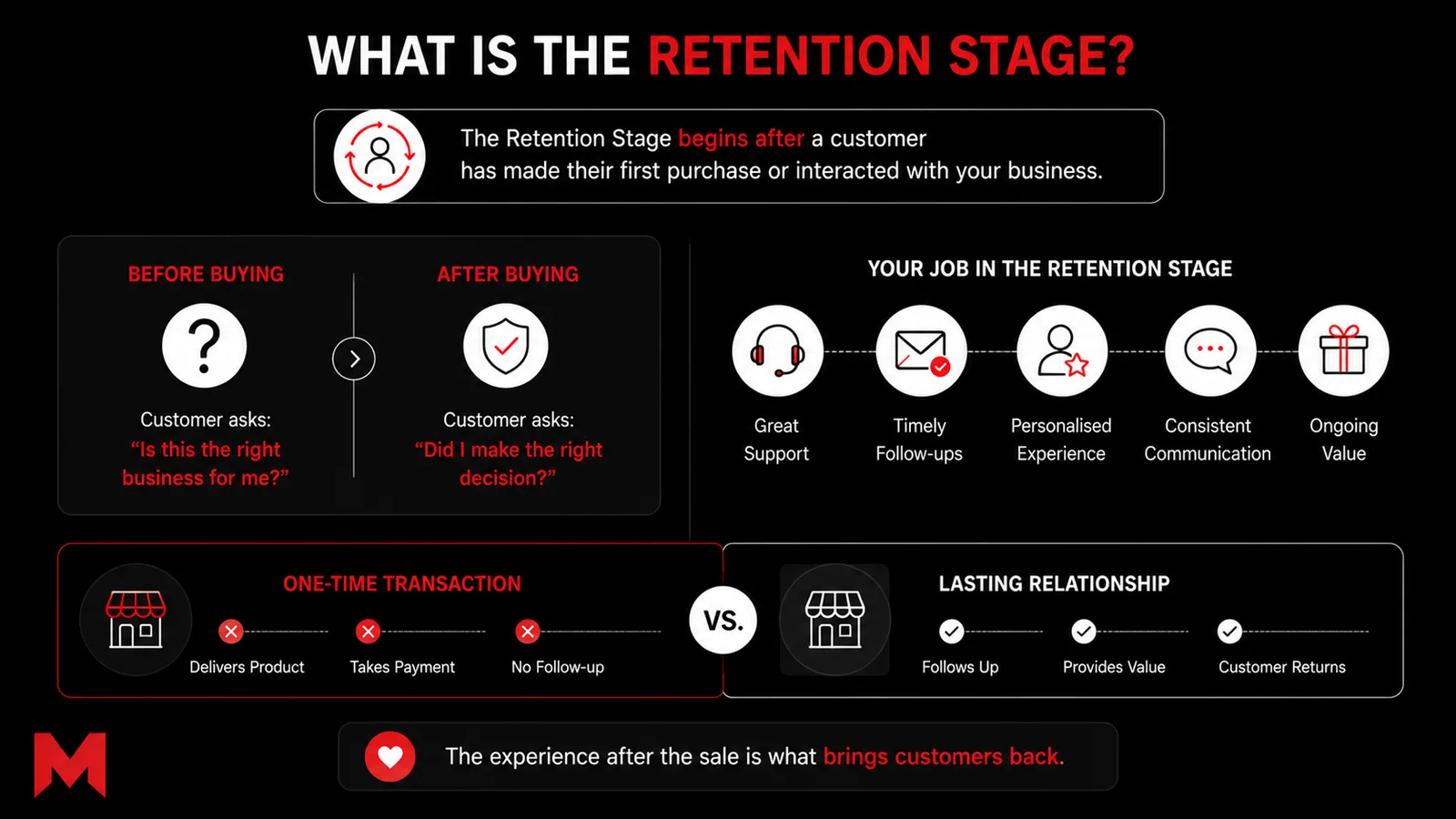
The Retention Stage of the Customer Journey begins after a customer has completed their first purchase or interaction with your business.
At this point, the customer’s question changes.
Before buying, they ask:
“Is this the right business for me?”
After buying, they ask:
“Did I make the right decision?”
Your job during the retention stage is to continue proving that they made the right choice.
This involves everything that happens after the sale, including customer support, follow-ups, communication, personalised experiences, and ongoing value.
For example, imagine two local furniture stores.
The first store delivers a sofa, completes the payment process, and never contacts the customer again.
The second store follows up after delivery, checks whether everything arrived correctly, shares furniture care advice, and informs customers about relevant new products.
When that customer needs another piece of furniture in the future, they are more likely to return to the business that continued the relationship.
The product may have been similar, but the experience was different.
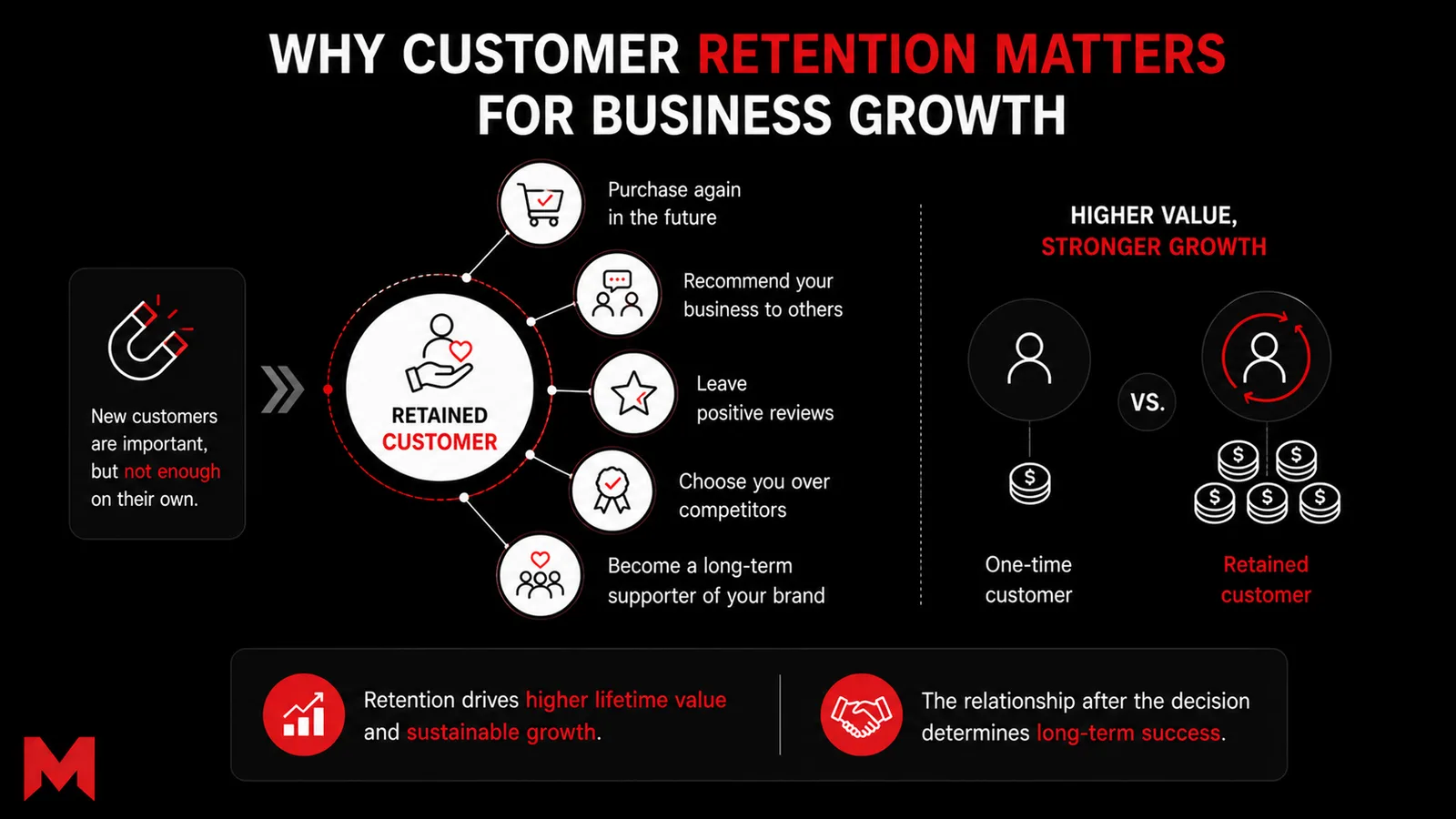
Attracting new customers is important, but relying only on new customers can make growth difficult.
Customer retention helps businesses create stronger relationships with people who already know and trust them.
A retained customer is more likely to:
This is why customer retention is closely connected to customer lifetime value. A customer who returns multiple times can often provide more value than someone who makes a single purchase and disappears.
The Decision Stage of the Customer Journey explains how customers decide which business to choose. However, the relationship after that decision determines whether they stay connected with your brand.
Building customer loyalty does not happen through one single action. It requires consistent effort across different parts of the customer experience.
Here are practical customer retention strategies businesses can implement.
The first experience after purchase can influence whether a customer returns.
A smooth onboarding process, clear communication, reliable delivery, and helpful support can create confidence from the beginning.
For example, a fitness centre can help new members understand their membership benefits, provide guidance during their first weeks, and make it easy for them to get support.
For many businesses, the customer experience begins online. A professional website that improves customer experience can make it easier for customers to find information, make enquiries, book services, and interact with your business.
Many businesses communicate regularly before a customer buys but become silent afterwards.
This creates missed opportunities.
Simple follow-ups, helpful updates, reminders, and useful information can keep your business connected with customers.
For example, a vehicle service centre can remind customers when their next maintenance appointment is due. A healthcare provider can send appointment reminders and useful health information.
Tools such as Email & SMS Marketing solutions can help businesses maintain consistent communication without manually contacting every customer.
Customer service has a major influence on retention.
Customers understand that problems can happen. What matters is how quickly and effectively a business responds.
A customer who receives helpful support after an issue is more likely to continue trusting the business.
Make it easy for customers to ask questions, report problems, and receive solutions.
Customers appreciate businesses that understand their needs.
Personalisation can be simple, such as remembering previous purchases, recommending relevant products, or providing communication based on customer preferences.
For example, an online clothing store can recommend products based on previous purchases, while a salon can remind customers when they may need their next appointment.
Automation tools can help businesses deliver more personalised experiences at scale. AI and automation solutions can support businesses by improving customer communication, handling enquiries, and creating smoother customer journeys.
Customer feedback provides valuable insight into what your business is doing well and where improvements are needed.
Ask customers about their experience through reviews, surveys, or direct conversations.
However, collecting feedback is only the first step.
Customers are more likely to stay loyal when they see that businesses listen and make meaningful improvements.
Customers who repeatedly choose your business should feel recognised.
Rewards do not always have to be discounts. Businesses can offer early access to products, exclusive benefits, referral rewards, or personalised offers.
A small gesture can show customers that their continued support is appreciated.
The relationship with a customer should continue beyond the transaction.
Businesses can provide value through educational content, useful advice, industry updates, and helpful resources.
For example, a home improvement company can share maintenance tips, while a financial advisor can provide simple guides to help customers make better decisions.
Creating useful content through SEO and content creation services can help businesses remain visible and valuable even after the initial purchase.
While many businesses focus heavily on attracting customers, they often overlook what happens after the sale.
Some common mistakes include:
The Consideration Stage of the Customer Journey shows how customers compare different options before buying. However, businesses must continue creating positive experiences after the purchase to keep those customers.
The Retention Stage of the Customer Journey is where businesses turn one-time buyers into long-term customers.
Customer retention is not about constantly offering discounts or sending promotional messages. It is about consistently delivering value, providing support, and creating experiences that customers remember.
Businesses that focus on retention can build stronger relationships, increase repeat purchases, and encourage customer recommendations.
The customer journey does not finish when a customer buys from you. It continues every time they interact with your business.
The Retention Stage of the Customer Journey begins after a customer makes their first purchase. It focuses on maintaining customer relationships through positive experiences, ongoing communication, and continued value to encourage repeat business and long-term loyalty.
The Retention Stage of the Customer Journey is important because retaining existing customers is often more cost-effective than constantly acquiring new ones. Loyal customers are more likely to make repeat purchases, recommend your business, and contribute to long-term business growth.
Some of the most effective customer retention strategies include delivering excellent customer service, following up after a purchase, personalising customer experiences, collecting feedback, rewarding loyal customers, and consistently providing valuable content or support.
Small businesses can improve customer retention by building strong relationships with customers, responding promptly to enquiries, providing consistent service, staying in touch through email or SMS, and creating memorable customer experiences that encourage repeat visits.
Customer acquisition focuses on attracting new customers to your business, while customer retention focuses on keeping existing customers engaged and encouraging them to return. Both are essential, but strong customer retention helps maximise the value of every new customer acquired.
Customer retention supports business growth by increasing repeat purchases, strengthening customer loyalty, generating referrals, and improving customer lifetime value. Businesses with high retention rates often build more stable and sustainable revenue over time.
Digital tools such as customer relationship management systems, email marketing, AI-powered automation, and personalised communication can help businesses stay connected with customers, provide timely support, and deliver better experiences throughout the Retention Stage of the Customer Journey.
Want this handled for you every month? See our Care and Growth plans, start with the Starter plan, or see all our services. Curious who we are? Read about us and how we work.
Built to be quoted by AI. This page ships with the same structured data we set up for clients.

Learn what the Consideration Stage of the Customer Journey is, how customers compare solutions and what businesses can do to build trust and win more sales.

Explore the stages of the customer journey and understand how customers discover, compare, decide and build lasting relationships with businesses.

Learn how the Decision Stage of the Customer Journey influences buying decisions and discover the key factors that help customers choose with confidence.

Learn what the Awareness Stage of the Customer Journey means and discover what every business should do before investing in digital marketing.
Learn what makes a brand actually memorable. Use the 5 Cs to improve clarity, consistency, credibility and brand recall, plus a free audit CTA.

Learn how to integrate social media into your digital marketing strategy to improve leads, SEO, and brand awareness. Get practical tips and a free marketing audit.
Type what you want to be found for. We'll come back with a real plan, not a sales pitch.